EYE DROPS
While lasers are often an important part of treatment, most glaucoma patients also need drops to lower the pressure enough to prevent further optic nerve damage. Drops can have side effects, but using preservative-free drops and dosing the drops less frequently can greatly reduce side effects.
Allergy to a drop is usually indicated by itchy, scaly, swollen eye lids and a red eye; usually this occurs after using an eye drop for months or years. (Brimonidine allergy is slightly different: red eye can occur without lid symptoms.) Many patients believe or have been told they are allergic to a drop when in fact their eyes were just irritated by the dose, the preservatives, or poor oil gland flow.
Hot compresses reduce irritation and redness because they improve the flow of oil (through the Meibomian glands) to the surface of the eye; the oil slows evaporation of the watery tears produced by the lacrimal gland and shields the surface from damage by the medications. Hot compresses do not just give temporary relief; they prevent long-term damage to the surface of the eye that can cause permanently red eyes. They also make glaucoma blindness less likely: some people skip or quit medications because of irritation that would not have occurred if hot compresses had been done at least twice weekly, every week of the year. Lubricating drops are nearly useless, but serum tears made from a patient’s own blood work well with hot compresses to heal the ocular surface (cornea and conjunctiva).
HOW TO PUT IN DROPS
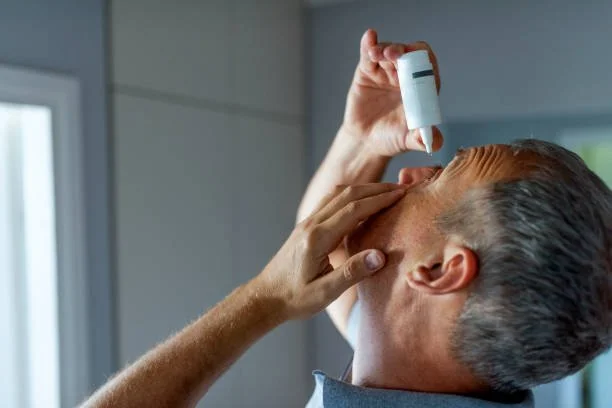
The most important point: do not look in the mirror. This will inevitably result in many drops going down your cheek; your drops will run out before the insurance company will pay for another bottle, and you will lose vision.
Instead, lean back in a chair or better yet lie down on a bed or couch. Look at the ceiling directly above you (not in front of you). Look at the place where water dripping off the ceiling would land in your eye. It may help to pull down your lower lid or hold up your upper lid. Now bring the bottle into view and squeeze. The drop will fall on your eye. Use only 1 drop — routinely using 2 drops will cause your medicine to run out before the pharmacy will issue a refill, and you will suffer additional nerve damage.
Don’t blink hard the moment the drop hits your eye — that can push most of the medicine off the eye before it can absorb.
Wait at least 5 minutes between different drops — but it is better to take your drops 1-2 minutes apart than to skip them because you are short on time.
If your medicine is prescribed to be taken every other day, you should have some system to track dosing such as a phone reminder, all the odd days of the year, moving the bottle between 2 places on its shelf, or Monday, Wednesday, Friday, Sunday.
CLASSES OF DROPS and their SIDE EFFECTS
PROSTAGLANDINS
Generic (brand) names: latanoprost (Xalatan, Iyuzeh), bimatoprost (Lumigan), travaprost (Travatan), tafluprost (Zioptan), latanoprostene (Vyzulta)
Cap color: turquoise (light blue)
This class is usually tried first because prostaglandins lower pressure more than any other class and have relatively few side effects. Prostaglandins improve flow through the back drain of the eye (uveoscleral outflow) and lower pressure during sleep as well as daytime.
Dosing frequency: FDA approved for once daily, though I prefer every other day to reduce side effects. Evening dosing is slightly more effective than morning, but some people find it hard to remember an evening drop; for those patients, it is better to take it in the morning.
Side effects include:
darkening or reddening the eye lids,
shrinking the fat behind the eyeball so that the eyeball sinks back and the lids hang down further,
darkening the iris from green or light brown to dark brown (blue irises don’t usually darken),
inflammation (including red eye, aching eye, retinal swelling, reactivation of corneal herpes
eye lash growth (almost never a problem!)
Lumigan (bimatoprost) is likelier than the others to cause side effects. Latanoprost and tafluprost are milder and unlikely to cause side effects if dosed every other day. Prostaglandins dosed daily lower eye pressure about 8 points; if dosed every other day, reduction is about 7 points on the off day. Daily dosing lowers pressure only a little more, but substantially increases the frequency of side effects.
Latanoprost and tafluprost are available in preservative-free vials which reduce external irritation: (redness, burning, dryness).
BETA-BLOCKERS
Generic (brand) names: timolol (Timoptic, Cosopt when combined with dorzolamide, Combigan when combined with brimonidine), levobunolol (Betagan), betaxolol (Betoptic)
Cap color: yellow; dark blue if combined with dorzolamide or brimonidine
Beta-blockers slow production of the internal fluid of the eye (aqueous humor) by the ciliary body, like slowing a sink faucet. They don’t lower pressure during sleep; for maximum benefit while awake, it is preferable to dose beta-blockers upon arising .
Dosing frequency: Timolol is commonly dosed twice daily, but works just as well if dosed every morning upon arising. The combination with dorzolamide will lower pressure another half point for many hours if dosed a second time. The combination with brimonidine will also lower pressure about another point if dosed a second time, but brimonidine/timolol have no effect while sleeping, so a second dose will be most useful taken about 8 hours after the morning dose.
Side effects:
asthma:
Asthma does not occur in people who never had asthma, but patients who need a daily inhaler will be worsened by timolol or levobunolol. Mild asthma in patients needing an inhaler only 1-2 weeks a year for exposure to cats or an upper respiratory infection will not usually be aggravated by a beta-blocker. Betaxolol is slightly less effective for pressure, but also less likely to worsen asthma; daily inhaler patients will sometimes benefit from betaxolol every other day (one day in the right, the next day in the left).
slow heart rate
Patients with a heart rate less than 60 may develop problematic bradycardia with a beta-blocker.
inability to sense low blood sugar
Insulin patients will not get rapid heart rate, tremor and shakiness when hypoglycemic if taking a beta-blocker. They will still get sweaty, irritable and confused.
hair loss and depression (rarely)
allergy (itchy swollen lids months or years after starting the drop)
A different beta-blocker might not cause the allergy, so we sometimes prescribe a switch to a different drop
The above side effects (except allergy) can be minimized by nasolacrimal occlusion — after instilling the drops, avoid blinking, close the eyes, push the pointer finger against the bone at the inner corner of the lids aiming towards the back of the head.
Timolol and dorzolamide-timolol are available in preservative-free vials which reduce external irritation: (redness, burning, dryness). Timolol-brimonidine-dorzolamide is available in a special preservative-free bottle from Imprimis.
CARBONIC ANHYDRASE INHIBITORS
Generic (brand) names: dorzolamide (Trusopt, Cosopt if combined with timolol), brinzolamide (Azopt, Simbrinza if combined with brimonidine); pills: acetazolamide (Diamox), methazolamide (Neptazane)
Cap color: orange (dark blue for Cosopt, light green for Simbrinza)
These medications lower pressure during sleep as well as while awake. They slow production of the internal fluid of the eye (aqueous humor) by the ciliary body, like slowing the flow of a faucet.
Dosing frequency: the drops lower pressure best 3 times daily, but are more often taken twice daily to avoid irritation; once daily may be a reasonable compromise to reduce irritation if other glaucoma medications are in use and SLT has been done.
Side effects with the drops are minimal other than irritation of the eye, stinging upon instillation, and occasionally a metallic taste.
Side effects of drops:
corneal edema (swelling) — these drops are usuallly avoided in patients with corneal transplants or Fuch’s dystrophe
metallic taste
Side effects of pills (not drops):
more frequent urination with loss of potassium
often: tingling in lips, mouth, fingers and toes; reduced energy
kidney stones (rarely)
side effects are much fewer and often not noticeable with a low dose like acetazolamide 125 mg twice daily or methazolamide 25 mg twice daily
Dorzolamide-timolol is available in preservative-free vials, and dorzolamide is available in a preservative-free bottle from Imprimis.
ALPHA-2 AGONISTS
Generic (brand) names: brimonidine (Alphagan, Combigan when combined with timolol, Simbrinza when combined with brinzolamide), apraclonidine (Iopidine)
Cap color: purple (dark blue for Combigan, light green for Simbrinza)
These medicines have no effect during sleep. They slow production of the internal fluid of the eye (aqueous humor) by the ciliary body, like slowing a faucet to a sink.
Dosing frequency: approved for 2-3 times daily; since it has no effect while sleeping, take the first dose upon arising in the morning with a second dose about 8 hours later (a bedtime dose is useless); for patients who are also on other glaucoma medications and have had SLT, a single dose upon arising may be a reasonable compromise
Side effects:
sleepiness
dry mouth
allergy (after use for months or years, the eye may become red and pressure may rise)
RHO-KINASE INHIBITORS
Generic (brand) names: netarsudil (Rhopressa), netarsudil-latanoprost (Rocklatan)
Cap color: white
These medicines primarily improve outflow through the front drain of the eye (trabecular meshwork-Schlemm’s canal-episceral veins).
Dosing frequency: approved for once daily, but I usually advise taking it every other day
Side effects:
red eye (sometimes improves after the first 2 weeks, but about half of patients will have to stop the drop due to chronic redness)
tearing due to swollen conjunctiva obstructing the tear drain
PARASYMPATHOMIMETICS
Generic (brand) names: pilocarpine (Pilocar)
Cap color: dark green
Pilocarpine improves flow through the front drain of the eye by stimulating the ciliary body muscle to pull open the spongy trabecular meshwork.
Dosing frequency: 2-3 times daily when used with other glaucoma drugs
Side effects:
smaller pupil, which can make vision dimmer in low light (but sharper in good light); a smaller pupil can make cataract surgery more difficult, so I usually prescribe pilocarpine to patients who have already had cataract surgery
ache around the eyes (as though you had been studying too hard) for an hour the first 5-10 times it is used; this is usually not a problem for patients over 70, so they can start with the 4% strength; younger patients usually need to use 1% for a week or two before increasing to the higher strength
very rarely, retinal detachment (usually in near-sighted patients)
call if you have flashes, new floaters or peripheral darkness since these can be symptoms of retinal detachment require exam of the retina
Zhang ring test is a useful home weekly test to monitor for a detached retina: draw an 8 inch circle, ideally with a thick dark marking pen, on a standard 8.5 x 11” sheet of paper and put an X in the center; testing each eye separately and with the paper about 8 inches away, look at the center while testing your peripheral vision; any distortion or gaps in the circle could indicate a partial retinal detachment; an advanced glaucomatous visual field defect could also cause part of the circle to be faded
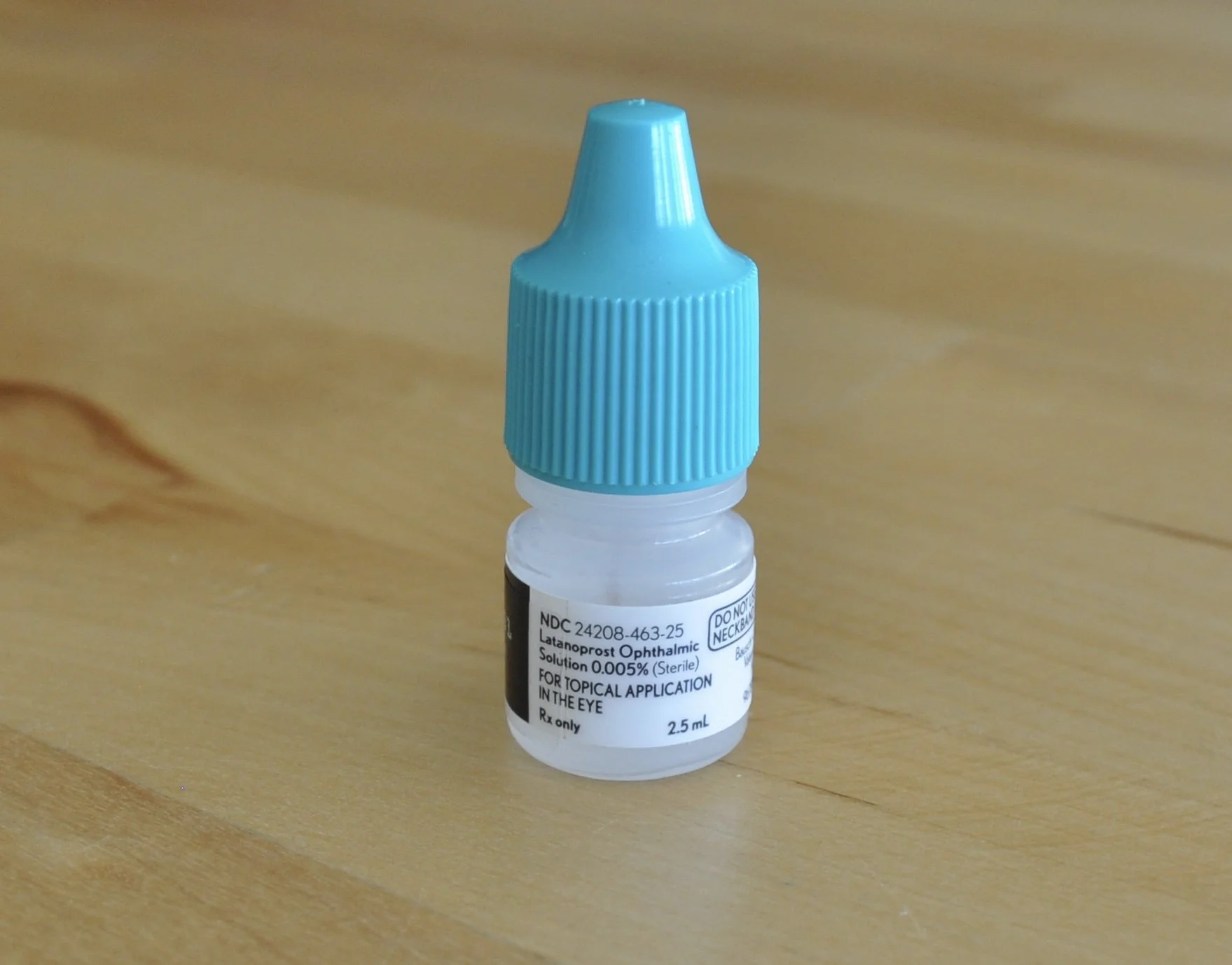
Tuorquoise (blue-green or light blue) caps are on prostaglandin drops
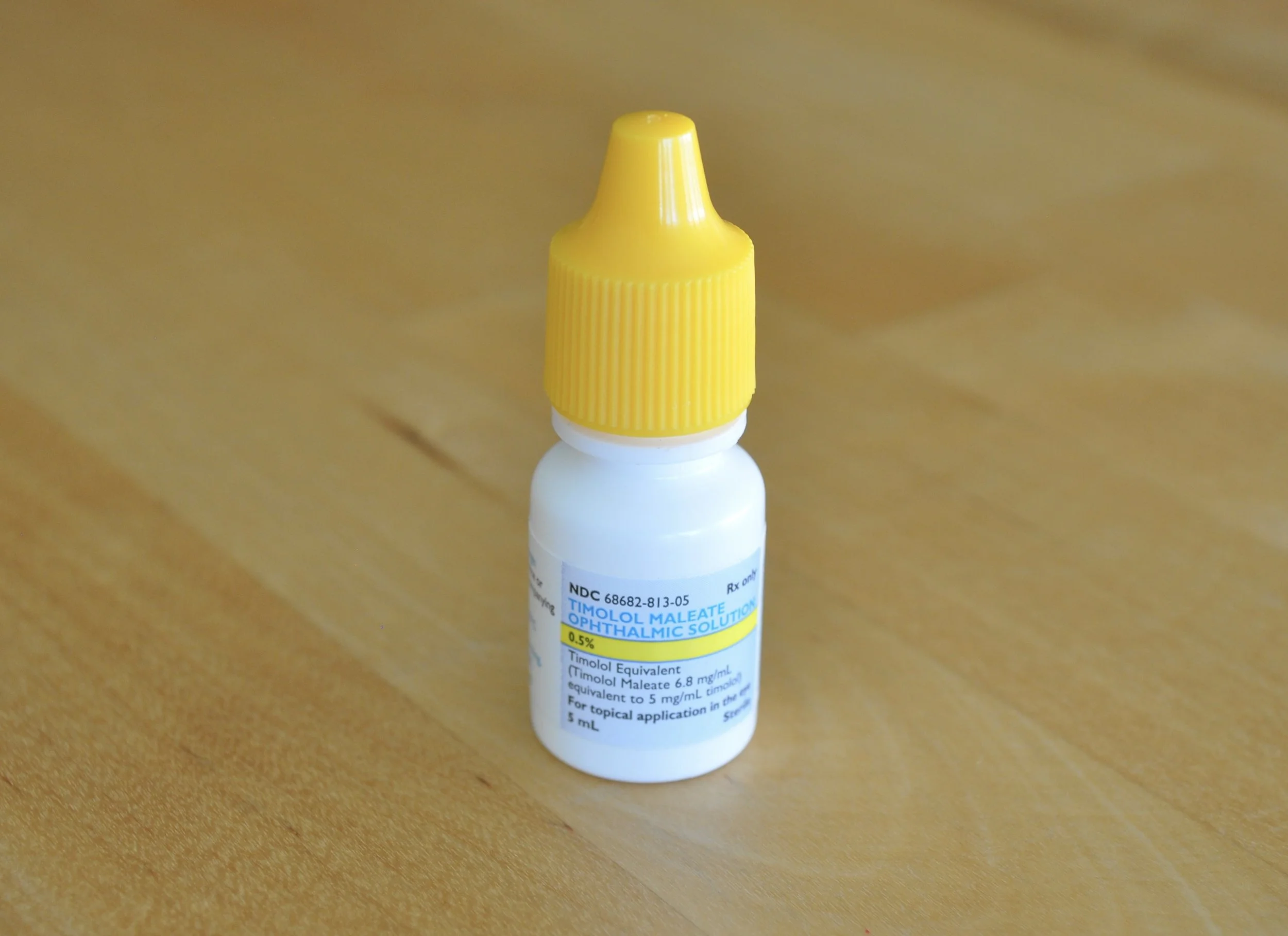
Yellow caps are on beta-blocker drops
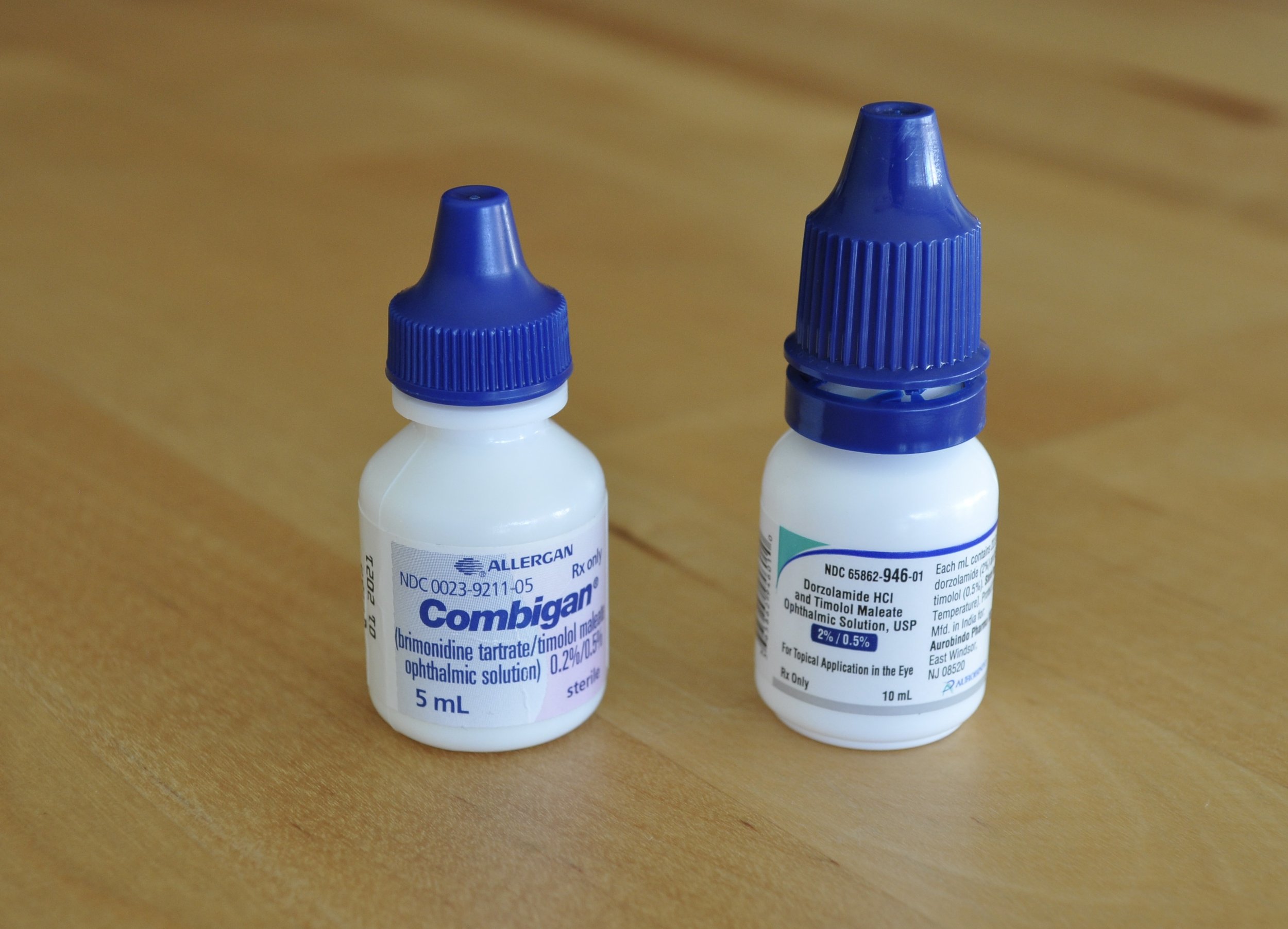
Blue caps are on combination medicines which include a beta-blocker
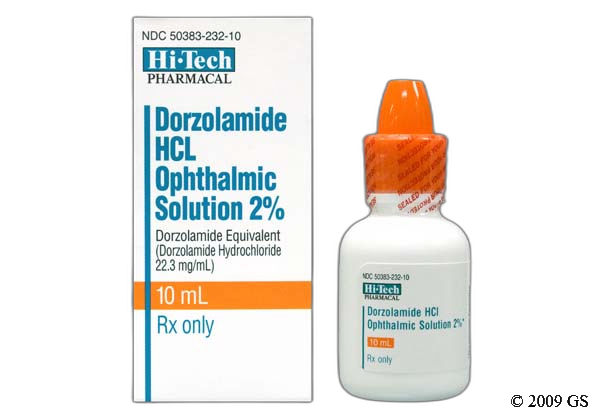
Orange caps are on carbonic anhydrase inhibitors
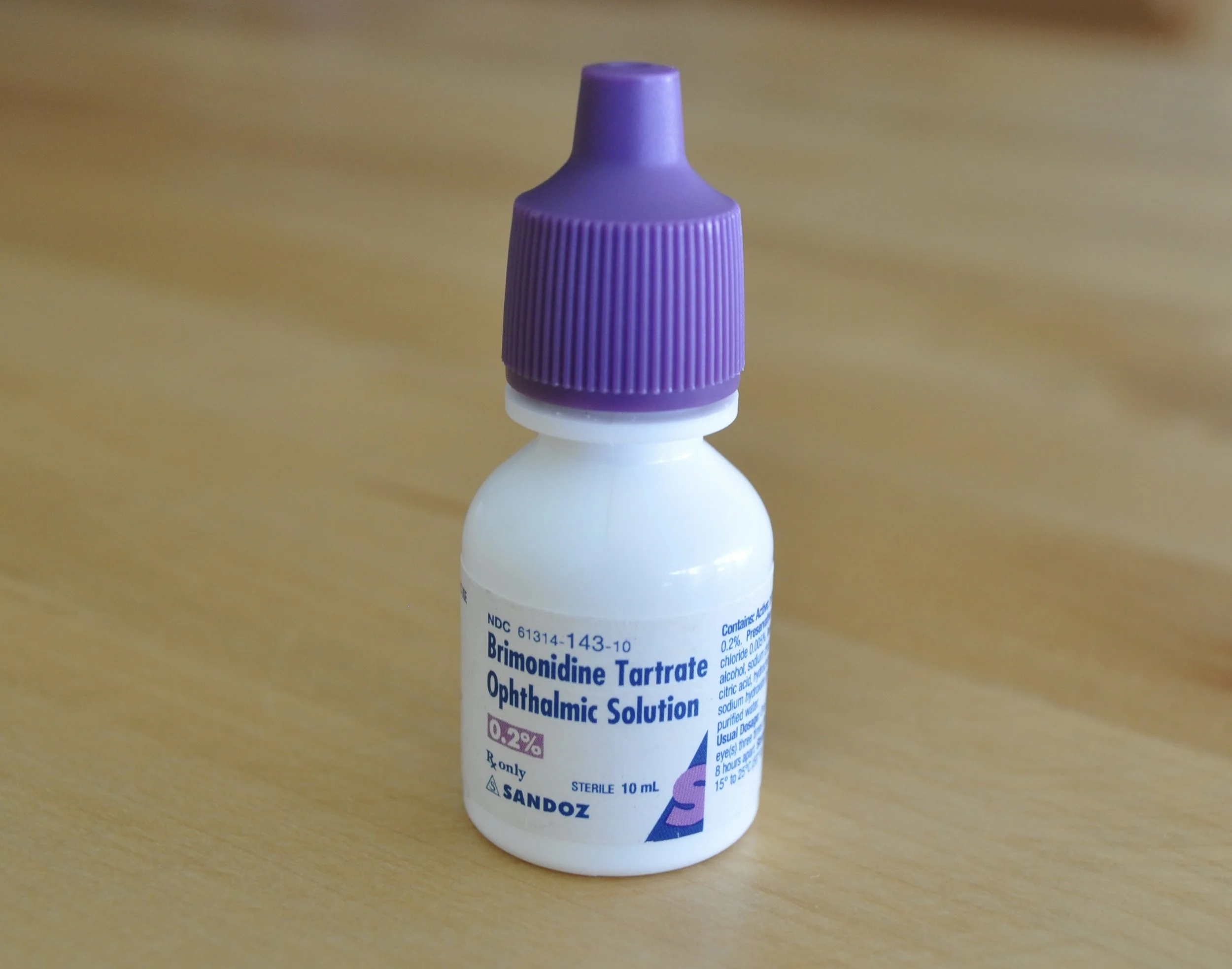
Purple caps are on alpha-2 agonists
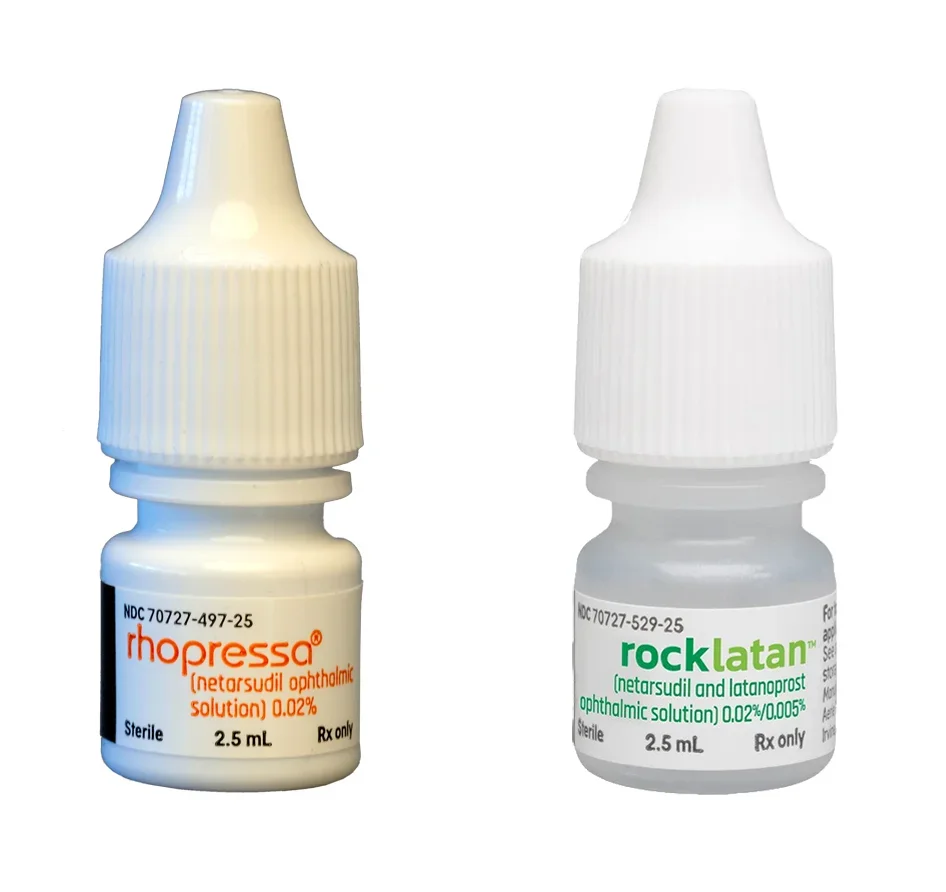
White caps are on rho-kinase inhibitors
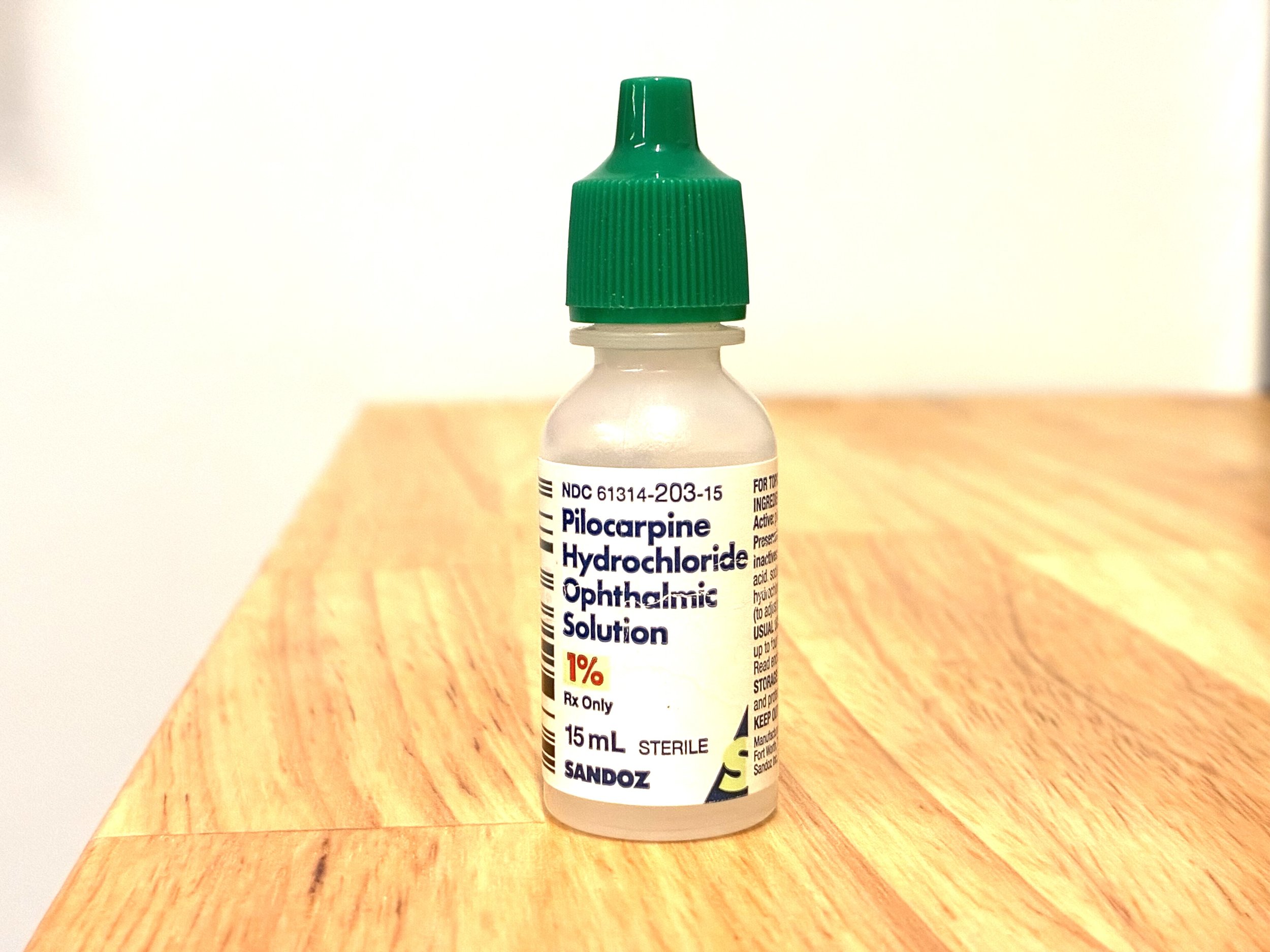
Dark green caps are on pilocarpine drops